
Field Notes: Spill Prevention Starts on the Plant Floor
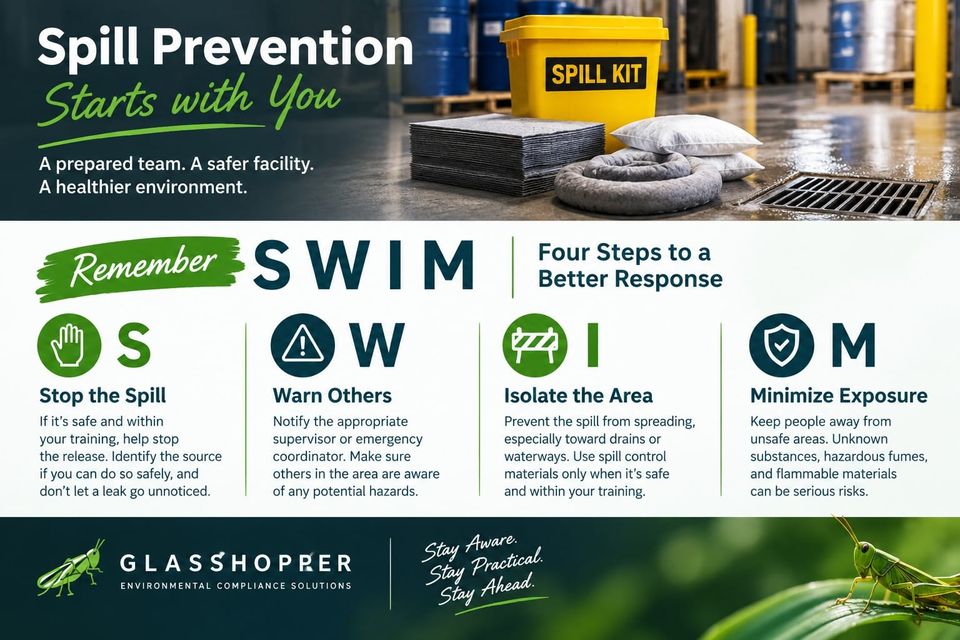
A spill plan is only as good as the people who know how to put it into action.
In manufacturing and industrial operations, environmental compliance involves more than having a plan tucked away in a binder. When a spill happens, employees need to know what to look for, who to notify, and how to respond safely.
That's why practical spill prevention training matters.
At Glasshopper, we believe the best training connects environmental requirements to the actual work happening at a facility. It should help employees recognize potential problems and understand the steps they can take to prevent a small leak from becoming a much bigger issue.
A Plan Is Only the Starting Point
Spill Prevention, Control, and Countermeasure (SPCC) plans and other environmental emergency response plans help facilities prepare for potential releases of oil and other hazardous materials.
Depending on the facility and its applicable requirements, these plans may address storage areas, equipment, drainage, inspections, spill response materials, employee training, and notification procedures.
But having a plan isn't the same as being prepared.
Employees need to understand how those requirements apply to their work areas and what actions they're expected to take when something goes wrong.
A leaking drum. A hydraulic hose that fails. Oil accumulating near a storm drain.
These situations call for awareness, preparation, and a clear response.
Remember SWIM: Four Steps to a Better Response
One practical way to reinforce spill response is to keep the key actions easy to remember.
At Glasshopper, we use SWIM as a simple reminder of the basic response priorities:
S — Stop the spill.
If you discover a leak, help stop the release when it is safe and within your training to do so. Identify the source if you can do so safely, and don't let an ongoing leak go unnoticed. Never put yourself at risk trying to stop a release.
W — Warn others.
Notify the appropriate supervisor or designated emergency coordinator according to the facility's response procedures. Make sure people in the area are aware of any potential hazards.
I — Isolate the area.
Take appropriate steps to keep the spill from spreading, especially toward catch basins, drains, or other pathways that could carry contaminants off-site. Use available spill control materials only when it's safe and consistent with your training and the facility's procedures.
M — Minimize exposure.
Unknown substances, hazardous fumes, and flammable materials can create serious risks. Keep people away from unsafe areas and follow the facility's emergency procedures. Leave response activities that exceed your training or available protective equipment to qualified personnel.
The goal isn't to turn every employee into a spill response specialist. It's to make sure people recognize a problem, know how to raise the alarm, and understand the safe first steps.
Don't Forget About Stormwater
A spill doesn't have to be large to create an environmental problem.
Oil and other contaminants can travel with rainwater into catch basins, drainage systems, and nearby waterways. That's why understanding a facility's drainage patterns and keeping spill control materials accessible are important parts of spill prevention.
Routine inspections can help identify leaking equipment, damaged containers, poor storage practices, or other conditions that deserve attention before rain carries contaminants away.
Facilities with applicable stormwater permits may also have specific inspection, sampling, maintenance, and reporting requirements. Those obligations should be understood and tracked as part of the facility's broader environmental compliance program.
The best time to prevent a spill from reaching a drain is before the spill happens.
Make Training Relevant to the People Doing the Work
Environmental training is more effective when employees can connect it to their own surroundings.
Walk the facility. Look at where materials are stored and handled. Identify nearby drains and potential spill pathways. Make sure employees know where response supplies are located and who to contact when something happens.
Use realistic examples that reflect the facility's actual operations.
Most importantly, encourage employees to speak up when they see a leak, an unsafe condition, or something that doesn't look right.
A strong environmental program depends on more than paperwork. It depends on people understanding their role and feeling confident enough to take the appropriate action.
The Glasshopper Take
Spill prevention isn't just about having the right plan. It's about putting that plan to work every day.
Know your risks. Keep an eye on your equipment. Understand where water flows. Make sure your team knows what to do when something goes wrong.
And remember: stopping a small problem early can help prevent a much bigger environmental headache later.
Stay aware. Stay practical. Stay ahead.
Need help reviewing your spill prevention procedures or making environmental training more relevant to your facility? Glasshopper can help you build a practical approach that fits the way your operation actually works.